Selection guide, dimension drawings and catalogue available on request sales@lapsake.com Reply within 1 working day · OEM & export
中文 / EN Get a quote
Sterile processing essentials · factory direct

Sterilization containers, dimensioned first

Type III hard-anodized aluminium body, interchangeable silicone inserts, silicone gasket and 304 stainless hardware. The slot openings were not guessed — we measured 878 containers across 7 endoscope brands before deciding how a case should be built.

878container records measured
6interchangeable insert openings
134°Csteam sterilization duty
38sizes · 5 families
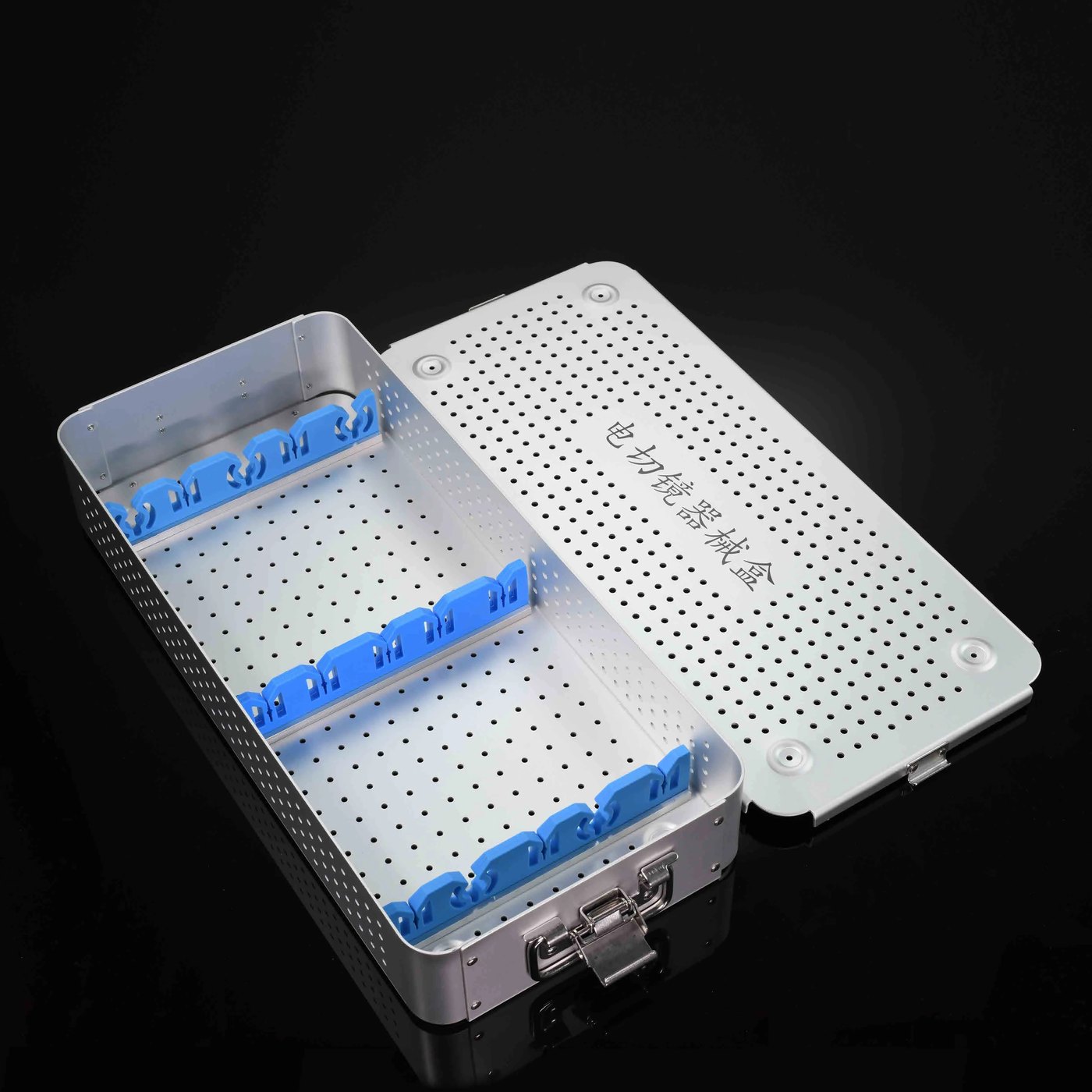
Studio photograph of an open Lapsake sterilization container showing two rows of blue interchangeable silicone inserts, perforated lid and stainless latches ALC sample · resectoscope set · interchangeable inserts Original studio shot, uncomposited
Product families

Show the goods first

All 38 sizes
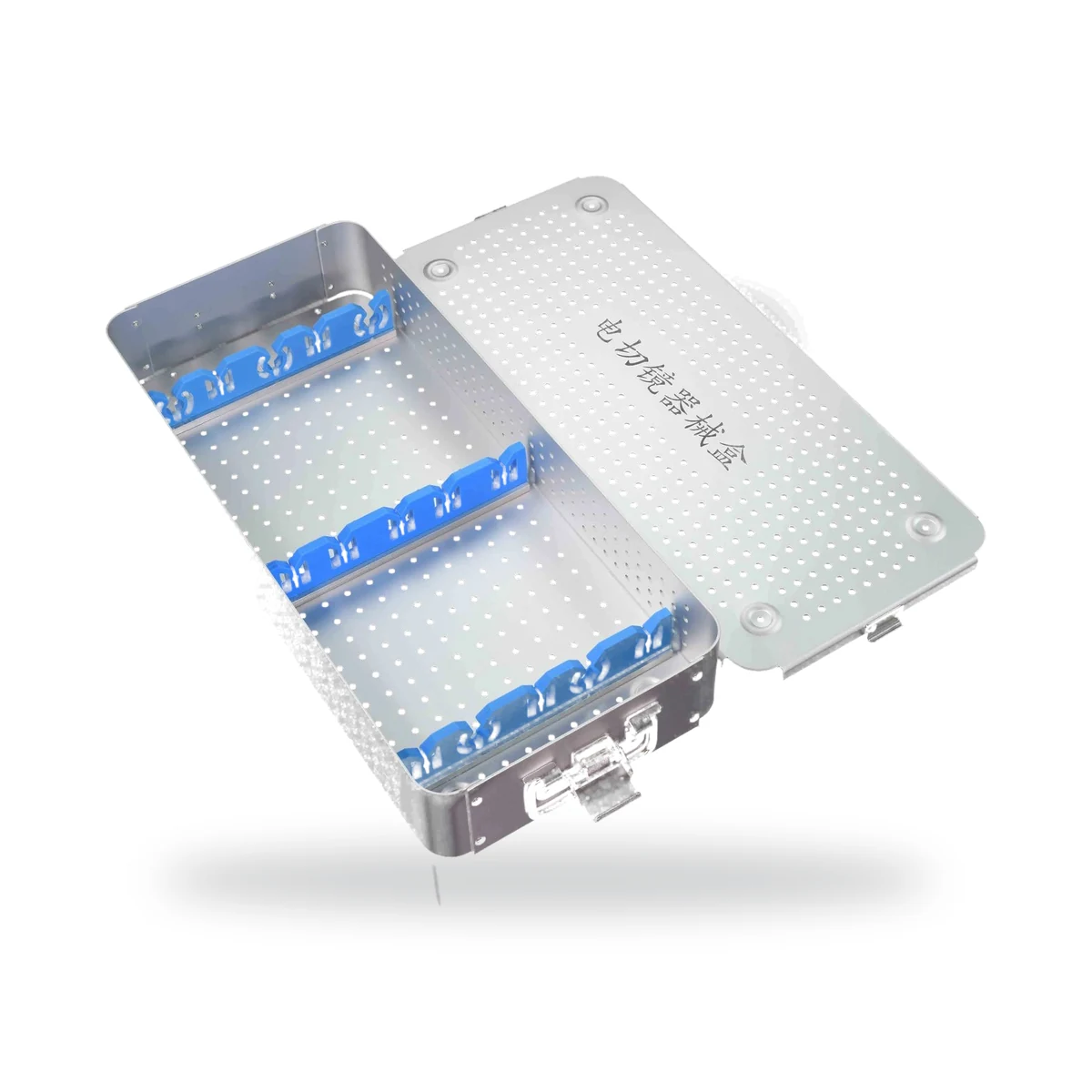
ALC hard-anodized aluminium sterilization case, open, with blue interchangeable silicone inserts
ALC series

Anodized aluminium case

Outer
450×300×100 — 600×450×200
Material
Al Type III + PPSU
Fits
Ø2–12.5 scopes
Details
SCC stainless steel sterilization case closed, perforated lid and four filter ports
SCC series

304 stainless case

Outer
330×200×100 — 600×450×200
Material
304 stainless
Bottom
solid / perforated
Details
Photography in progress
PPC series

PPSU transparent case

Outer
280×200×80 — 420×280×120
Material
PPSU
Benefit
verify without opening
Details
Photography in progress
NB series

Instrument basket

Sizes
200×200×100 — 600×400×400
Material
304 / 316L
Count
18 sizes
Details

ALC and SCC images are photographs of completed samples; remaining families will be photographed before series production. Prices are quoted per family and volume, not published on the site.

Select by workflow

One case has to pass five stations

A sterilization container is not a storage box — it is one link in cleaning, sterilization, storage and issue. If any link fails, the chain fails.

01

Cleaning

Removable inserts and radiused internal corners avoid protein and endotoxin traps; baskets run in ultrasonic on their own.

02

Inspection & packing

PPSU lets staff verify contents without opening; laser marking and five colour codes prevent mix-ups.

03

Sterilization

Perforated lid with filter ports supports steam penetration at 134°C; latches stay shut in transport.

04

Sterile storage

Sealing relies on silicone compression rather than an interference fit, limiting recontamination.

05

Issue & reuse

Gaskets and inserts are separate part numbers — replace the part, not the case. Validation target: 200 cycles.

878 records

Container dimensions compiled item-by-item from official data of 7 brands

51.1 %

of samples fall in 246–290 mm width; the industry converges on a 35 mm band

6 openings

Ø2 / 2.7 / 4 / 5 / 10 / 12.5 mm interchangeable inserts cover 90%+ of diameters

200 cycles

wash–134°C sterilize–dry validation target — a target, not a completed claim

Source: Lapsake cross-brand container dimension table v4 (878 records / 7 brands) and diameter × working-length matrix v1 (281 paired records, 51 with manufacturer part numbers), compiled to 2026-09.

Resectoscope set fixed inside the container: sheath, handle ring and irrigation tube seated in separate silicone inserts
How a resectoscope set is actually held — inserts separate scopes, preventing knock damage and blocked cleaning surfaces
Sizes & fit

Width converges. Length diverges.

You can read this straight out of OEM catalogues: KARL STORZ narrow endoscope containers keep a constant 152.4 mm (6″) width, and 4, 5 and 10 mm scopes share the same width and length — only working length changes the case. Large containers hold 279.4 mm (11″) with just three height steps.

  • Pick the insert opening by scope diameter, then the case length by working length.
  • 300 mm is the densest working length, so case lengths come in a few standard steps.
  • Two single-scope cross-sections are widely referenced in China: Medidul 80×52 mm, Aesculap tray 84×41 mm.

Full dimension patterns & selection table

Materials & validation

Multi-material only works after four gates

Aluminium for weight, PPSU for transparency, silicone for sealing, stainless for strength — the combination pays off only when all four gates clear.

Thermal match

CTE of aluminium ≈ 23 and PPSU ≈ 50 (×10⁻⁶/°C). Sealing uses silicone compression (20–30%) instead of an interference fit, so elastic parts absorb the differential.

Cleaning validation

Identify the hardest-to-clean features first, then test protein residue, endotoxin and TOC. Nothing ships until all three pass.

Leak testing

Positive-pressure decay, vacuum bubble and helium methods combined — both as-new and after 200 cycles.

200 reprocessing cycles

Wash → 134°C steam → dry is one cycle; after 200, appearance, dimensions, sealing and residue are re-tested into a shareable report.
Key materials and process parametersDesign references (not certification claims): WS 310.1/.2/.3, ISO 15883, ISO 17665, ISO 11607 / EN 868, YY/T 0698 series, AAMI ST73, GB/T 8013, GB/T 3280, DIN 58953-7
PartMaterialKey parameterControl point
Body / lidAluminium 3003 / 6061Type III, film 25–50 μmFilm thickness and sealing (GB/T 8013), mark legibility
Transparent partsPPSUmould 130–160°C + annealingResidual stress, crazing, clearance against aluminium
GasketMedical-grade siliconecompression 20–30%Compression set after 200 cycles
Baskets / liners304 / 316Lwire and mesh per instrumentGround welds, Ra, deburring
Fitting sizes—CpK ≥ 1.33Critical-size inspection, insert interchangeability
Quality & verifiable claims

We publish status, not adjectives

Every claim on this site is registered with its evidence and status. Whether these containers are devices in China is being submitted for a written classification opinion; several Southeast Asian markets regulate them as devices requiring local registration.

Open the claims register

Claims and evidence statusExcerpt — full register on the quality page
ClaimStatus
Cross-brand dimension patterns and insert openingsVerified
Type III anodising 25–50 μmIn validation
Suitable for 134°C steam sterilizationIn validation
All items pass after 200 cyclesPlanned
Not regulated as a device (China)Opinion pending
FAQ

Four questions we answer most often

What size container fits a 10 mm laparoscope?

Usually the width does not change — the length does. KARL STORZ lists 4, 5 and 10 mm scopes in the same 152.4 mm (6″) narrow container; for two scopes up to 10 mm plus a light guide the reference is 469.9 × 152.4 × 76.2 mm at ~310 mm working length. Our six interchangeable insert openings cover this.

Are sterilization containers medical devices?

Market-dependent. In China this family has no matching catalogue entry and its standards sit in the YY/T 0698 packaging series, so procurement is usually treated as general goods; we are applying for a written classification opinion and will publish it. Several Southeast Asian markets regulate containers as devices.

Why aluminium instead of all stainless?

Weight and visibility: aluminium is about 40% lighter than an all-steel case and PPSU about 60% lighter than stainless while letting staff see the contents. The cost is differential expansion (CTE ≈ 23 vs ≈ 50), which is why sealing must come from silicone compression rather than an interference fit.

Minimum order and lead time?

Standard sizes accept small batches and first-article validation. Custom tooling plus validation typically takes four to six weeks to first article. Gaskets and inserts are supplied as separate wear parts. Final quantities, prices and lead times are set in the formal quotation.

All questions and evidence →

Send the instrument list. We check the fit first.

Tell us the department, scope diameters and working lengths — or attach your list and a photo of the current setup. You get a selection table, a quotation and a sampling plan.